Fitness supine board helps you exercise your abdominal muscles
Nowadays, gyms are becoming more and more popular, and more and more fitness enthusiasts will choose gyms for exercise. People with various needs want to lose weight, gain muscle, and shape their body. exercise Muscles, etc., various needs and corresponding exercise methods make people dazzled and gain insights, and subsequently they have to face a variety of fitness equipment choices. Today the editor is going to introduce how to build eight-pack abs by lying on your back!
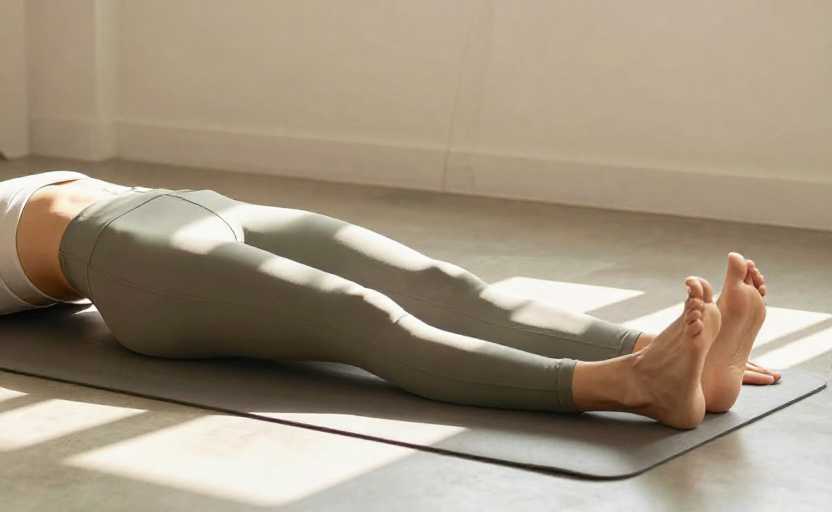
How to use a supine board
Sit-ups can directly target the abdominal muscle groups, and through subtle changes in movements, muscles in different parts of the abdomen can be exercised, ultimately achieving a shaping effect. The most common method of sit-ups is to lie on your back, bend your knees to about 90 degrees, place your feet flat on the ground, fix them with the help of external force, and then use your abdominal muscles to sit up.
1. Position of hands
In traditional sit-ups, the fingers of both hands are crossed behind the head. During the sit-up process, the head is often raised with the help of the hands, which can easily cause neck muscle strain. The correct method is to put your hands slightly close to your ears. For first-time contacts, you can cross your hands and put them on your abdomen to reduce the difficulty. When you sit up, you should let your abdomen exert force, instead of lifting your head with your hands as we usually do.
2. Strength point
When their feet are hooked on the lower sponge pad of the supine board, many people will use their feet to exert force to lift the body up. This will increase the burden on the thigh and hip flexors, thus reducing the role of the abdominal muscles. When the external force increases, the hips are often used to exert force to complete the sitting action, which can easily cause damage to the waist and tailbone. When you stand up, use your abdominal muscles to pull the person up. Keep your back slightly bent and do not straighten it, otherwise it will easily cause back muscle strain. You cannot use brute force in a force-borrowing project. If you cannot get up, you need to rest.
3. Speed
When we do sports standard tests, we count them in terms of times per minute, which leads many people to think that the faster the sit-ups are, the better. This is a common problem among many sit-up practitioners. In fact, this is not the case. The faster the speed, the less pressure will be placed on the abdominal muscles. The correct method is to slow down as much as possible and exercise the control ability of the abdominal muscles. You will find that when you do it in slow movements, your abdomen will have a burning feeling. This is fat burning. Exhale slowly when you stand up, take a long breath when you lie down, and control your rhythm.
4. Standing height
Can sit-ups build abdominal muscles? In traditional sit-ups, after standing up, you need to let your forehead touch your knees and then return, that is, the upper body quickly rises from a lying state to about 90 degrees. In fact, the load on the rectus abdominis does not reach the heaviest stage before rising to 45 degrees. Because in this starting stage, there is a synergistic effect of the sternocleidomastoid, pectoralis major, intercostal muscles, psoas minor, psoas major and iliacus muscles. In the process of exceeding 45-90, due to the continuous shortening of the resistance arm from the upper center of body weight to the hip fulcrum, the load on the abdominis muscles as a crane becomes smaller and smaller, and the load on the rectus abdominis does not reach its heaviest.
Only when the upper body reaches 45 is the best time for the resistance growth function of the rectus abdominis. Therefore, the effect of sit-ups is not that the higher you stand up, the better. The correct method is to stop at a position of about 45 feet and then slowly return to the position to fully exercise the rectus abdominis muscles.
When lying down, don't put your head on the supine board, so that your abdomen will be in a state of tension throughout the exercise.
5. Number of exercises and sets
Sit-ups are easier than other exercises, but they need to be practiced step by step, otherwise it will easily cause muscle strain, which is not conducive to long-term persistence. You can try 5'/group at the beginning, and then add one more time for each exercise. When it reaches 15'/group, you can try and add one more group, and gradually complete 3 groups for each exercise. Before each group of exercises, you can lie on the supine board, stretch your arms behind your head and straighten them until your abdomen feels stretched. Hold on for 15 seconds to relax your abdominal muscles.
Things to note
1. The effective stretching time is normally 10 minutes, not too long or too short. It is best to practice these 10 minutes divided into 10 times, 1 minute each time, with a 2-minute rest in between. After the exercise, you can jog for a few minutes to relax the joints of the whole body.
2. Exercising once every morning and afternoon is more conducive to creating perfect abdominal muscle lines.
3. Before doing the curved abdominal muscle board exercise, it is best not to engage in strenuous exercise and just do simple warm-up exercises.
4. The highest point of the arc-shaped abdominal muscle board is about 50 cm from the ground. double
Disclaimer:
1. This article is sourced from the Internet. All content represents the author's personal views only and does not reflect the stance of this website. The author shall be solely responsible for the content.
2. Part of the content on this website is compiled from the Internet. This website shall not be liable for any civil disputes, administrative penalties, or other losses arising from improper reprinting or citation.
3. If there is any infringing content or inappropriate material, please contact us to remove it immediately. Contact us at: