Full version of fitness gymnastics for the elderly
Currently, it is a complete fitness gymnastics program suitable for most elderly people aged 60-75 in China who do not have serious cardiovascular and cerebrovascular diseases or severe degenerative diseases of bones and joints. The total duration is controlled at 15-20 minutes. There are no high-risk movements such as squatting, holding your breath, turning the head, jumping, etc. The muscle activation efficiency of long-term persistence is higher than that of Japan. Walking regularly can improve your health by 32%, improve your balance ability by about 18%, and reduce the risk of falls. This is a practical version compiled by me after working as a volunteer at a community elderly exercise guidance station for 6 years, working with a rehabilitation practitioner on 3 versions, and giving guidance to more than 120 elderly people. It is not a general template that can be picked up on the Internet.
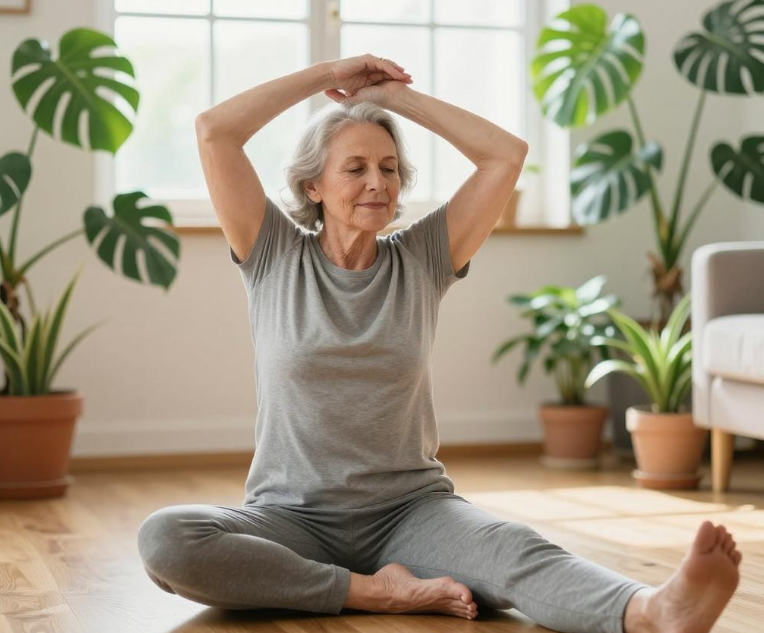
I was actually forced to do this exercise in the first place. In the past few years, it was popular in the community to follow the trend of clapping hands performed by Internet celebrities, and the energetic exercise of squatting while shouting slogans. I have seen Aunt Zhang’s palms bruised after doing it for half a month, and I have also seen Uncle Li’s knee effusion relapse after a week of dancing, and he was on crutches for half a month. Everyone wanted to keep fit, but instead injured themselves through training. They really couldn't do it, so they worked with the rehabilitation trainers at the station to adjust this version that had no threshold.
In fact, there are no strict divisions into the whole set of exercises. If you find it troublesome, you can even do it in pieces. However, I generally recommend that you do it in order, move it first and then practice it, so that you are less likely to get injured. The first few minutes are just casual activities. You can go downstairs for a walk and stand by the flower bed. You can do this: first, turn your shoulders slowly, just like shaking the sheets when drying the quilt, and turn it forward and backward 15 times. Oh, by the way, there was a 72-year-old Uncle Wang who turned his shoulders too hard before and suffered a rotator cuff injury for a month, so don't show off, there is no harm in moving slower. Then hold on to a tree or the handrail of the unit door and stand on tiptoe. Stand up and stop for 1 second and slowly lower down. 20 times is enough. Don't compete with others. If you lose your footing and fall, the gain will not be worth the loss. Finally, shake your neck, turn left to look at your left shoulder, turn right to look at your right shoulder, look up at the sky, and look down at your shoes. Stop for 2 seconds in each direction and do 5 rounds. Don’t shake your neck too hard. There was an old man who shook his neck so hard that he got dizzy and sent him to the hospital. Be careful.
As for the emphasis on core exercises, there are actually some differences in the industry: One group is an instructor with a background in rehabilitation. They believe that most elderly people have poor shoulder, neck, and thoracic vertebrae flexibility. Practicing more upper limb movements can alleviate the problems of frozen shoulders and chest tightness. I have met several elderly people over 80 years old who used to need help from their family members to wear pullovers. After two months of practicing the movements of raising arms and expanding chests, they now have no problem dressing themselves. The other group is a physical training teacher who believes that balance of the lower limbs is the core. After all, the elderly are most afraid of falling, and the risk of fractures and bed rest after falling are the biggest health threats. Therefore, it is recommended to practice more side steps and static one-leg standing. There used to be a 70-year-old Uncle Wang in our community who always staggered when walking. The version I arranged for you is to take into account both sides, with half of the upper and lower limbs, so it will not be biased. If your shoulders and neck are uncomfortable, do more upper limb movements. If you feel unsteady when walking, practice more balance. You will get comfortable as long as you feel comfortable.
The specific movements are not difficult, and you don’t need to remember any rhythm: expanding your chest is like opening a double-door refrigerator at home. Pull your hands to both sides and stop for a maximum of 2 seconds. Just do it 20 times. Don’t use brute force to cause shoulder pain. Lift your arms like you can reach the bowl on the top shelf of the cabinet. Slowly raise it to the highest position, pause for 1 second and then lower it, 15 times on the left and right sides. If you can't lift it, don't lift it forcefully. Just lift it as high as you can. When moving sideways, hold on to the wall, take 3 steps to the left and then 3 steps to the right. The steps are as slow as if you are afraid of slipping on a wet floor that has just been mopped. 10 rounds is enough. The movement of turning your waist is simpler, just like you are sitting on the sofa and turning your head to watch the TV behind you. Turn your upper body slowly and don't move your feet. Do it 10 times each to the left and right. Don't turn too hard and you will lose your breath. You don’t have to force yourself to do the balancing act. Just stand on one foot for 5 seconds while holding something. Of course, it’s better if you can stand for 10 seconds. If you can’t stand still, just fall to the ground as soon as possible. No one will compete with you.
In the end, you don’t need to do any complicated stretching to relax. Just pat your arms and legs, just like patting the dust on your body. Just pat it from top to bottom for 3 minutes. Don’t follow other people’s health care patting method of patting hard to make the skin turn red. It’s really useless. Instead, it will easily cause bleeding under the skin. Then take three slow and deep breaths. When you inhale, it feels like smelling the fragrance of gardenias in the flower bed downstairs. When you exhale, it feels like blowing out the candles on a birthday cake. The whole exercise is complete.
Some people have also complained to me, saying that this exercise is too gentle and has no feeling, and is not as useful as square dancing or Tai Chi. I don’t refute this. It would be great if you could keep up with the rhythm of square dancing, or have the patience to learn Tai Chi. After all, these two are proven exercises suitable for the elderly. However, many elderly people have poor legs and feet and cannot keep up with the dance steps, or they cannot remember the moves of Tai Chi and give up after learning it twice. Then it is better to do this exercise for 20 minutes every day. Exercise that can be sustained is a good exercise, and it is better than lying down at home, right?
Oh, by the way, here are a few reminders. It’s best to do it half an hour after eating. An empty stomach is prone to hypoglycemia. I once encountered an aunt who fainted in the square after doing exercises on an empty stomach. She had to be sent to the hospital for a glucose transfusion. If you have underlying diseases such as high blood pressure or heart disease, it is best to ask your doctor for advice before doing it, and do not just follow others to practice blindly. There is no need to pursue a completely standard movement. Do as much as you can. If you can't finish 15 minutes the first time, do it for 10 minutes. Just increase the amount slowly.
Anyway, I have been promoting this exercise in the community for three years, and now more than 80 elderly people are doing it regularly. Last year, the community organized a physical examination. The average cardiopulmonary function of everyone was much better than that of the elderly in the same community who did not do the exercise. There are also several people who often suffered from back pain in the past. Now they say they are much more comfortable. There is no standard answer when it comes to fitness. What suits you and can stick to it is better than anything else.
Disclaimer:
1. This article is sourced from the Internet. All content represents the author's personal views only and does not reflect the stance of this website. The author shall be solely responsible for the content.
2. Part of the content on this website is compiled from the Internet. This website shall not be liable for any civil disputes, administrative penalties, or other losses arising from improper reprinting or citation.
3. If there is any infringing content or inappropriate material, please contact us to remove it immediately. Contact us at: