Introductory fitness books for beginners
Just match your core needs at the moment - if you are afraid of being injured by practicing blindly, you should first read the anatomy introductory book. If you want to get started quickly, you can directly copy the plan from the practical thin book. If you want to understand "why you practice like this", avoid IQ tax and choose evidence-based fitness science first. If you have no basic knowledge, you will definitely not go wrong if you close your eyes and read "Atlas of Sports Anatomy (3rd Edition)" + "The Complete Book of Fitness and Nutrition". The rest can be supplemented as needed.
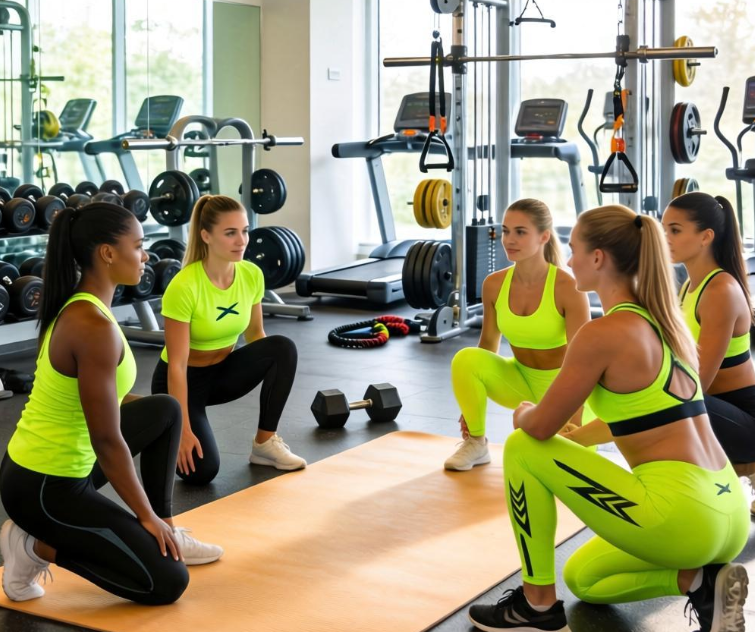
Damn, I have really stepped into a trap when I say this. When I first started working out, I followed the trend and stocked up on seven or eight so-called "god-level introductory books", including autobiographical tutorials by European and American bodybuilding masters, best-selling books by domestic fitness bloggers, and several professional textbooks from physical education institutes. As a result, most of them were gathering dust on the bookshelf. Either the movements are too demanding, and I can't even do standard push-ups. I just slumped down and injured my lumbar vertebrae if I followed the instructions. ; Either there are pages full of metabolic formulas and tables of muscle start and end points, which made me sleepy until I turned two pages after get off work. It took me half a year to figure out that when choosing a fitness book, the more famous the better, nor the more professional the better. It all depends on what you want now.
Let’s talk about the first thing most novices panic about: fear of getting injured if they practice incorrectly. After all, when I first entered the gym and stood in the equipment area, I was at a loss. I couldn’t even tell the difference between a Smith frame and a gantry frame. I followed the videos on the Internet and practiced blindly. The next day, my trapezius muscles were swollen or my knees hurt. At this time, I first learned about anatomy and absolute stability.
The most authoritative one is definitely the "Atlas of Sports Anatomy" that is commonly used in sports schools. The full-color muscle diagrams are very clear. Which muscles grow where and what state they are in when they exert force. You can know it by reading it twice. Of course, many people think this book is too textbook-like and boring, and they can’t read it after turning two pages. Then they can replace it with "Sports Anatomy: A Physical Skills Analysis Book that Athletes Must Read Thoroughly" written by a French author. This book is completely written for ordinary fitness enthusiasts. It will directly bind muscles to daily movements. For example, when doing squats, the knees should go beyond the toes. Will it hurt the knees? Which muscles are the right ones to exert force when practicing the glute bridge? The diagrams are all very down-to-earth. A girl I worked with before who couldn’t tell the difference between her biceps and triceps did it for half a month. Now when she gets sore during shoulder exercises, her first reaction is not to shout "Am I doing it wrong?" but to feel for myself whether the position of exerting force is correct. Of course, there are also old-school fitness enthusiasts who feel that this simplified version of the anatomy book is not rigorous enough, and the functions and starting and ending points of many deep muscles are not fully described. If you are just doing general fitness and do not plan to compete or be a coach, it is completely sufficient. If you really want to take a professional route, it is not too late to come back and read the textbook.
If you just want to start practicing quickly and don’t want to do so much theory, and you are exhausted when you get home from get off work and just want to fool around on the yoga mat for 20 minutes, or you can go to the gym on the weekend and practice as planned without messing around, then just choose a practical book.
If you don't want to go to the gym, just go to "Fitness Without Equipment". The movements range from the simplest wall push-ups and kneeling squats to advanced one-arm push-ups and single-leg squats, all of which can be done without equipment. It also provides novices with a four-week plan from easy to difficult, so they can just follow it without having to figure it out on their own. If you prefer gym training, many people will recommend "Schwarzenegger's Complete Book of Fitness". This book is indeed a classic in the bodybuilding circle. The standard movements and key points of exerting force in almost all training movements are clearly written. But to be honest, the underlying logic of this book is biased towards bodybuilding competition preparation. Many planned trainings The amount of training is too much for a pure novice. I had a friend who just followed the plan in the book and practiced for 2 hours a day as soon as he applied for the card. After three days of practice, his knees hurt and he had difficulty walking down the stairs. He just didn’t notice that many of the plans in the book are suitable for people with more than one year of training. Novices can easily get injured if they just copy the homework. If you want to find something more suitable for ordinary domestic enthusiasts, you can also take a look at Binka's "Hardcore Fitness", which explains many questions often asked by novices in a very simple way, such as why you can't lose weight even if you do abdominal exercises every day, and why the longer the aerobic exercise is, the better. It’s easy to read, but of course there are controversies. Many evidence-based fitness bloggers feel that some of his opinions are not rigorous enough. For example, the recommendations for some supplements are subjective. You can just read it as an introductory science. If you are not sure, check two books to compare, and you won’t get into big holes.
The training problem has been solved, but the eating part is the hardest hit area for novices. After all, it is not nonsense to practice for 30% of the time and eat for 70% of the time. Those who want to build muscle still cannot gain weight even if they eat protein powder every day, and those who want to lose fat are starved and stuck in the plateau for half a month. Most of them have wrong eating logic.
The most recommended one is "The Complete Book of Fitness Nutrition". The author is a German sports nutritionist. All opinions are supported by experimental data, such as how much protein people of different weights should eat every day to build muscle, how much calorie gap should be controlled when losing fat so as not to lose muscle, and how to eat to satisfy the appetite without affecting the effect. There are no evil ways of "losing ten pounds in seven days", which is especially suitable for people who want to understand the underlying logic. Of course, some people think this book is too "voluminous". You have to count grams to eat a meal. Ordinary people don't have the energy to work. Then you can change it to "You Are What You Eat". This book is more focused on daily diet adjustment. It does not count calories and teaches you how to match three meals. For example, what staple food should you choose to make you less hungry? How to eat enough protein is suitable for people who don’t want to make fitness too difficult. When I was trying to lose weight last year, I read the two books side by side. I didn’t have time to count the grams at work during the workday, so I ate the latter. When I cooked at home on the weekends, I used the former. I lost 12 pounds in three months, and I never felt hungry.
Finally, here are some tips to avoid pitfalls. Don’t buy books whose covers say “Build your vest line in 7 days” and “Become a muscular man in 30 days”. They are all gimmicks and there is no quick fix for fitness. Don’t buy the kind that is all about posing for models, without even mentioning the key points of movement and easy mistakes. It looks fancy but is actually of no use at all.
Oh, by the way, no matter how good the book is, it’s not as good as if you started to read it. I've seen people who have a cabinet full of fitness books and can't even do 10 standard push-ups, and I've also seen people who haven't read any books but practiced hard with a reliable coach for half a year and got obvious results. Books are just tools to help you avoid detours. They are not a secret book that will make you thinner and stronger while lying flat. Pick a book and start moving after turning two pages. It is better than anything else.
Disclaimer:
1. This article is sourced from the Internet. All content represents the author's personal views only and does not reflect the stance of this website. The author shall be solely responsible for the content.
2. Part of the content on this website is compiled from the Internet. This website shall not be liable for any civil disputes, administrative penalties, or other losses arising from improper reprinting or citation.
3. If there is any infringing content or inappropriate material, please contact us to remove it immediately. Contact us at: