fresh food allergies
Many people think that only processed foods that have gone bad or have additives added can cause allergies. In fact, completely fresh foods such as freshly picked fruits and vegetables, freshly processed fresh food, etc., are not less likely to cause allergies than processed foods. Even because the allergenic ingredients are not destroyed and have more impurities attached, they are more likely to cause hidden allergic reactions. This type of allergy is essentially an IgE-mediated type I hypersensitivity reaction, which is completely different from food poisoning caused by a bad stomach. Most of the symptoms occur quickly, with symptoms appearing within a few minutes to half an hour after exposure. In mild cases, there may be redness and swelling around the mouth, itching, and rashes. In severe cases, laryngeal edema, difficulty breathing, and even the risk of shock may occur.
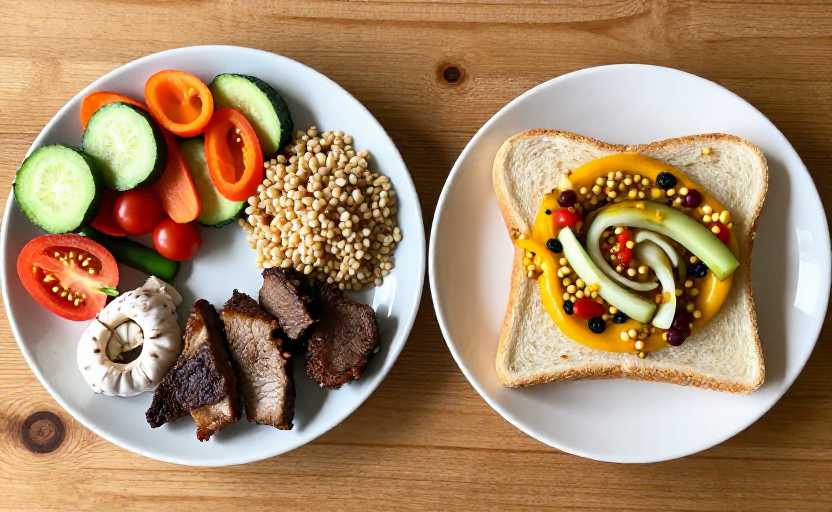
Last week, I went to the allergy department with a friend. She went to a peach orchard in the suburbs the day before. She picked a Yangshan peach, rubbed the skin and ate it. Within ten minutes, the area around her mouth turned red. Her upper lip was swollen as if she had a jujube in her mouth, and her throat felt tight. She used to eat canned yellow peaches and frozen peach chunks, and she never had any problems. Why did she have problems when she ate fresh ones?
At present, there is no completely unified conclusion on the clinical causes of allergies to such fresh foods. The two mainstream views each have their own evidence. One school of thought believes that the core reason is the undamaged natural allergenic proteins in fresh foods, such as lipid transfer proteins on the surface of fresh peach skins, cysteine proteases in raw kiwis, and Ara h1 protein in freshly dug fresh flowers. These proteins are extremely active and will be denatured and inactivated as long as they are heated above 60 degrees Celsius. Therefore, the same food that has been processed and heated will not cause allergies. This is also the core reason why my friend had no problem eating canned peaches but got infected by eating fresh peaches.
The other school of thought prefers "exogenous impurity triggering". They believe that in many cases the problem is not the food itself, but the things attached to the surface of fresh food. Freshly picked fruits and vegetables may be contaminated with nearby pollen, insect secretions, or even low-toxic biological pesticides that have just been sprayed by vegetable farmers but have not degraded. Freshly slaughtered fresh food may have incompletely excreted animal metabolites. These impurities are the real allergens. There is ample evidence for this. Many people who are allergic to fresh peaches wash the peaches with salt for five minutes, then peel them off and eat them, and nothing happens.
Xiao Zhou, a nurse I know who has been in the allergy department for eight years, is an old patient with fresh day lily allergy. She has done several controlled experiments in her spare time. Freshly picked fresh day lilies are stir-fried directly in the pot. After three bites, her palms start to itch and her stomach feels nauseated. However, if she blanchs the food for 10 minutes and then soaks it in water for two hours, she can eat a large plate without any problem. She prefers two triggers working at the same time: "The colchicine in fresh daylilies is irritating, but if it gets pollen or something, the immune system will explode. ”
Oh, by the way, don’t think that organic and home-grown fresh food is safe. Last month, Corey took in an aunt who was over 60 years old. She picked small tomatoes grown on her balcony and stuffed them into her mouth without washing them. Within half an hour, she broke out in hives. After a long time of checking, no pesticides were found. The residue was finally confirmed to be caused by a natural cross-linked protein in the tomato epidermis. She usually ate tomatoes that had been stored in the supermarket for two or three days without any problems - it was because the freshness was too high, the protein had not had time to degrade, and the activity was too strong, which directly stimulated the immune system.
There is also a popular niche saying that this kind of fresh food allergy is essentially caused by "the immune system is too delicate." Nowadays, everyone's living environment is too clean, and the daily exposure to microorganisms and trace impurities is few. The immune system has nothing to do, so it treats originally harmless food proteins as invaders and attacks them. People who hold this view would recommend exposure slowly in small doses to gradually build up tolerance. However, most clinicians do not recommend this approach. After all, individual differences are too great. Some people may suffer from laryngeal edema and suffocation at the slightest touch, so they cannot take the risk.
If you really encounter an allergy to fresh food, don’t rush to blacklist the entire food category. You can make sure there are people around you and prepare anti-allergy medicines, and try a few more times to compare: first try to wash and peel the food thoroughly, and then try to heat and cook it. If everything is fine, then it is most likely that it is either an impurity problem attached to the surface, or a raw allergenic protein that is afraid of heat. Just pay attention to how you handle it in the future, and you don’t have to completely avoid eating it. If you are still allergic after treatment, it is not too late to consider taboos.
A few days ago, the old director of the auscultation room joked with the patient, saying that nowadays everyone always talks about "freshness" and eats freshly picked and freshly killed. But don't forget that everyone's immune system has a different temperament. Other people's supplements may be your allergens. It never hurts to be careful before eating.
Disclaimer:
1. This article is sourced from the Internet. All content represents the author's personal views only and does not reflect the stance of this website. The author shall be solely responsible for the content.
2. Part of the content on this website is compiled from the Internet. This website shall not be liable for any civil disputes, administrative penalties, or other losses arising from improper reprinting or citation.
3. If there is any infringing content or inappropriate material, please contact us to remove it immediately. Contact us at: