The Difference Between Yoga and Tai Chi
The essential difference between the two is rooted in the underlying cultural logic. Yoga originated from the spiritual tradition of ancient India. Its core is to realize the connection between individual consciousness and cosmic consciousness through the step-by-step progression of postures, breathing, and meditation. The movement logic tends to be "targeted adjustment, from outside to inside."”; Tai Chi originated from the soil of Chinese Taoist culture. Its core is to transport Qi and blood through soft and flexible movements to achieve the balance of yin and yang among people, people and the environment. The movement logic is biased towards "integrated movement and internal and external cultivation". As for the speed of movement, whether stretching is needed, and whether there is a meditation session that everyone often talks about, these are just superficial differences.
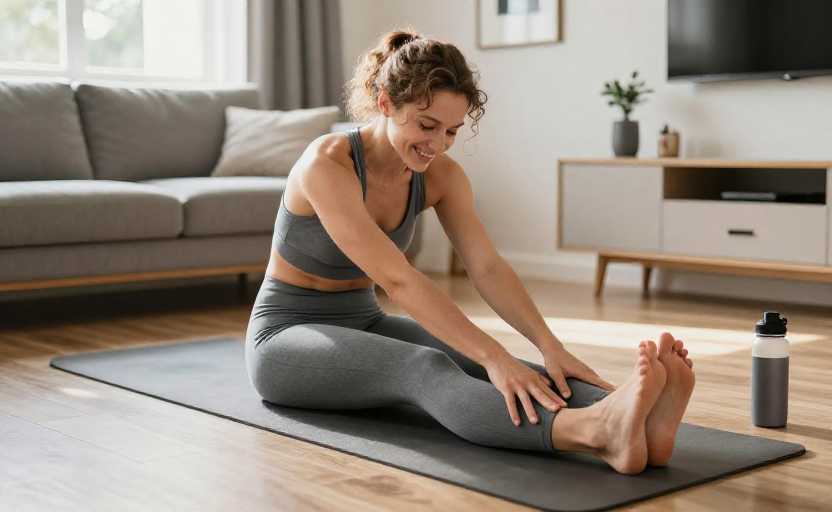
If we really want to talk about it in detail, there are a lot of arguments that practitioners of different schools around me have had. There is no absolute standard answer. I can only talk about the differences that everyone can touch based on my own practical experience and the different perspectives I have come into contact with.
A while ago, I took my best friend who often teaches vinyasa flow yoga to experience it at the Tai Chi studio I often go to. She stood for five minutes before the Wuji pole collapsed. She said, "I usually practice the core sequence and hold the boat pose for three minutes and I am not so weak. Why is my back completely exposed when I stand still?" ” You see, this is the difference in the underlying logic that is directly reflected in the body sense: the force exerted by yoga is active and targeted. Even if it is a static posture, you actively control the contraction and extension of the muscles to accurately stimulate the target muscle groups or fascia. ; Tai Chi's pile exercises are "force-relieving". You have to release all the energy you are holding in your body, and let your weight sink along your bones to the soles of your feet. It may seem like you are not moving, but in fact, the energy and blood are flowing through your body. People who have not practiced it cannot find the feeling of relaxation at all. Instead, they will subconsciously tense up to fight, and they will naturally tire quickly. Even the ending of the practice is different. At the end of yoga, you basically lie down in the Corpse Posture for ten minutes, allowing the muscles and nerves to completely stretch and relax. ; After practicing Tai Chi, you have to stand for three minutes to collect the energy, fold your hands on the Dantian, and collect the dissipated Qi. This is completely two sets of logic.
Of course, if you say this to an orthodox Ashtanga inheritor, you might roll your eyes - after all, among the eight limbs of classical yoga, asanas are only the third most basic limb, and the following breath control, pranayama, concentration, meditation, and samadhi are the core. Nowadays, the "weight loss yoga" and "shoulder and neck yoga" that are everywhere in the gym only take the most superficial functions of yoga, and are far from the "consciousness awakening" pursued by old-school practitioners. Tai Chi is more controversial. The man who has practiced Tai Chi in the park for ten years may think Tai Chi is just slow-motion aerobics. The young man who practices competitive Tai Chi will tell you that the force of Tai Chi can push people up to three meters away. Maybe the old boxer of Chen style Tai Chi I would also like to add that "Tai Chi is originally a martial art, and fitness is just a casual thing." The goals are different, and the training methods are very different, but fundamentally it still follows the Taoist logic of "yin and yang, hardness and softness", and it will never deviate from the word "whole".
I made a joke when I first started practicing Tai Chi. When I was doing cloud hand exercises, I subconsciously stretched my shoulders as much as I did in yoga. The master slapped me on the back and said, "What's the point of fighting like stretching noodles?" Move loose! ” Stretching in yoga is conscious and active stretching. Many times the teacher will ask you to hold the sore position for 30 seconds, which is to stretch the adhering fascia. ; There is never a term for "stretching" in Tai Chi. All movements are performed with the waist belt, and the shoulders, elbows, wrists, hips, knees, and ankles are all loose. The energy from turning the waist goes out along the fingertips, and the tendons will naturally stretch out, without you having to exert any force at all. Breathing is even more different. There are more than a dozen breathing methods in yoga, such as Ujjayi breathing, abdominal breathing, and holy light breathing. They all actively control the rhythm and depth of breathing, and use breathing to drive postures. ; You never need to deliberately count your breaths in Tai Chi. After practicing for a long time, the movement and breathing will naturally become integrated. Inhale when you rise and exhale when you fall. It is as natural as panting while walking. If you deliberately adjust your breathing, it will easily cause your breath to drift.
There are many "Tai Chi yoga" classes on the market now, and I have experienced them twice. Different people's opinions vary greatly. A teacher I know who has been practicing classical yoga for 20 years is particularly opposed to it. He said that the "relaxation" of Tai Chi and the "active force exertion" of yoga are essentially in conflict. If they are practiced together, it will easily disrupt the body's force-generating mode and lead to injuries. ; But many young boxers in our gym think it doesn't matter. When your whole body feels tight after practicing an old routine, you can do a few baby poses to loosen your waist, which will relax you much faster than meditating directly. I personally think that if you are an ordinary enthusiast and want to use this activity to move your body, there is no need to worry too much about the differences between martial arts. As long as you are comfortable after practicing and have no pain or injury, you can do it any way.
To put it bluntly, whether it is yoga or Tai Chi, they are all physical practice methods left by the predecessors, and there is no distinction between them. If your shoulders and neck are so stiff recently that you can't lift them up, and you want to relieve the discomfort quickly, go for a few sessions of orthographic yoga. The results will be much faster than Tai Chi. ; If you suffer from insomnia all year round, have a weak spleen and stomach, and are always in a state of tension, try standing on a Tai Chi pile for fifteen minutes every day. The kind of relaxation that comes from the seams in your bones is hard to find by practicing yoga. What suits you is the best.
Disclaimer:
1. This article is sourced from the Internet. All content represents the author's personal views only and does not reflect the stance of this website. The author shall be solely responsible for the content.
2. Part of the content on this website is compiled from the Internet. This website shall not be liable for any civil disputes, administrative penalties, or other losses arising from improper reprinting or citation.
3. If there is any infringing content or inappropriate material, please contact us to remove it immediately. Contact us at: