
Youth health education
The core implementation path for youth health education at present has never been through physical hygiene classes that are squeezed out to only 10 minutes a week in schools, nor through scattered reminders from parents, but through the establishment of a support system of "family, school, and society, and three-dimensional coverage of physiology, psychology, and behavioral habits." This is the most intuitive conclusion I came to after following a grassroots disease control and education team and visiting 8 middle schools and talking to more than 200 children.
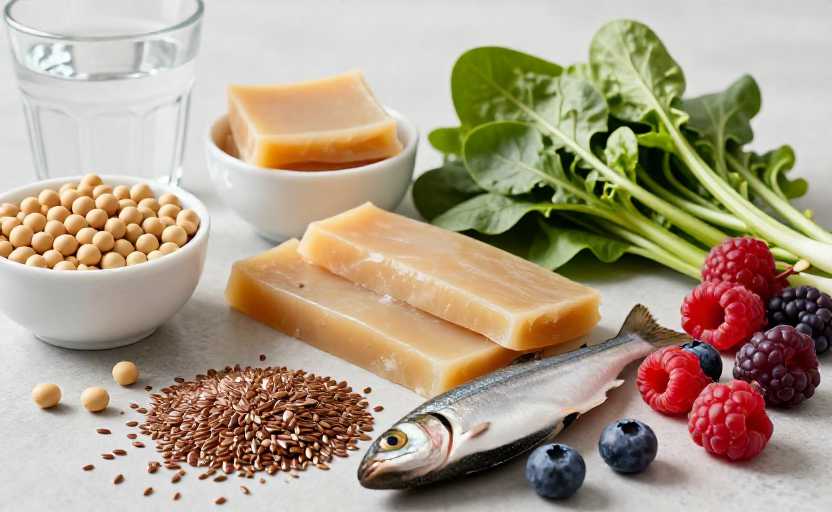
To be honest, there is actually quite a quarrel in the industry about the direction of youth health education. One group is pragmatists, who believe that we should focus on the most obvious indicators: myopia rate, obesity rate, and sexual safety incident rate. The assessment standards are clear and the results are quick. Don’t believe it, I have actually seen a middle school that measured BMI three times in one semester, posted the weight data on the class bulletin board, and forced severely obese children to run three laps every day. After one semester, the obesity rate in the grade was indeed reduced by 3 percentage points. However, there were also children who secretly hid in the toilet to induce vomiting because their weight was reported in public. The other group are supporters of whole-person development. They feel that these measures of focusing on indicators are putting the cart before the horse. Real health education should teach children how to get along with their own bodies: how to deal with body anxiety caused by watching short videos, how to refuse the first cigarette offered by a classmate, and how to make a trade-off between catching up on homework and getting enough 7 hours of sleep, even if these things cannot be quantified into numbers on the assessment form.
Interestingly, when we asked children during the survey "Who should they go to first when they encounter health problems?" less than 20% of the children said they would ask their parents, and 62% of them first responded by searching for short videos or social platforms. There is a girl in the second grade of junior high school who is 160cm and weighs 92 pounds. She is still secretly taking weight-loss pills from unknown sources because she has read too many content about "a good girl is no more than 100". Her mother has never told her what the normal weight range is. She only says, "Eat more and don't always think about losing weight." There is also a boy who is a freshman in high school and only sleeps 4 hours a day for a week. He feels that "it is okay for a young man to stay up for a few days and catch up on his sleep after the college entrance examination." No one told him that lack of sleep caused a decrease in concentration, which would actually reduce his review efficiency. Data from the Chinese Center for Disease Control and Prevention in 2023 also supports this: only 22% of our country's adolescents' health literacy compliance rate. The "compliance" here only refers to the ability to answer basic health knowledge correctly, and even fewer children can incorporate common sense into daily behaviors.
When I helped design health classes for a private middle school, I initially used the outline of a unified textbook, which talked about exercise frequency and dietary pagodas. The children in the audience were either writing papers or sleeping, and no one listened at all. Later, we simply changed the first class into a "Health Rumor Complaint Conference" and asked everyone to talk about the outrageous health common sense that their parents said: "Don't wash your hair during menstruation", "Coke kills sperm", "Eating cold drinks will cause colds in the uterus". The whole classroom was instantly fried. We followed these misunderstandings and explained the physiological principles behind them, and then gave them specific solutions: " The food in the cafeteria is heavy on oil and salt, so you can make a bowl of soup and rinse it before eating." "Don't drink three cups of coffee after staying up late. Taking 15 minutes to lie down at noon is better than anything else." Later, this class became the most popular class in the entire grade. Some children even came to us and asked us, "Can wearing OK glasses really control myopia?" and "Can pimples be squeezed?"
As for the most controversial issue now, "whether health education should be included in the high school entrance examination", both sides of the argument are valid. Supporters are mostly people from the education management department. They feel that only by adding rigid constraints can health classes be prevented from being forever occupied by mathematics and English. In 2022, Yunnan will include the physical health test points in the high school entrance examination, accounting for 20 to 40 points. This has indeed made many schools that did not even offer physical education classes begin to seriously test children's vision and arrange exercises. But the voices of opposition are also very real: front-line head teachers said that many schools, in order to collect scores, conduct surprise training before exams, asking children to run 5 kilometers every day to practice endurance, which in turn makes children who originally like to play sports become resistant to sports. ; Some students complained, "I originally had to memorize a lot of knowledge points, but now I have to memorize test points like 'drink 1500 ml of water every day', which makes me so bored that I don't want to drink water."
In fact, to put it bluntly, youth health education has never been about planting crops, sowing seeds, watering and waiting for harvest at the right time. Instead, it is like installing a safety APP on a child’s mobile phone: you can’t force it on him and force him to open it. You have to make him really feel that this thing is useful - it can help him block out the messy health rumors, help him avoid staying up late, and make him not feel ashamed because of the normal changes of his body. Only then will he take the initiative to open it. A few days ago, I met a junior high school boy who I had researched before. He said that after listening to the sleep knowledge we talked about last time, he now puts his mobile phone in the living room after finishing his homework every day. He slept 40 minutes more than before, and his recent mock test score has improved by two places. You see, there is actually no need for so many fancy assessments. If you can really help the children, the lesson will not be in vain.
Disclaimer:
1. This article is sourced from the Internet. All content represents the author's personal views only and does not reflect the stance of this website. The author shall be solely responsible for the content.
2. Part of the content on this website is compiled from the Internet. This website shall not be liable for any civil disputes, administrative penalties, or other losses arising from improper reprinting or citation.
3. If there is any infringing content or inappropriate material, please contact us to remove it immediately. Contact us at:
