Provide diagnosis and treatment services for children's respiratory diseases
The core solution for providing diagnosis and treatment services for children's respiratory diseases has never been to expand the capacity of a single top-level hospital, but to build a linked service system of "primary screening and triage at the grassroots level, hierarchical precision treatment, and full-cycle health management" while taking into account the physiological particularities of children, the emotional needs of parents, and the actual carrying capacity of medical resources. This is a long-term path that can be implemented and replicated.
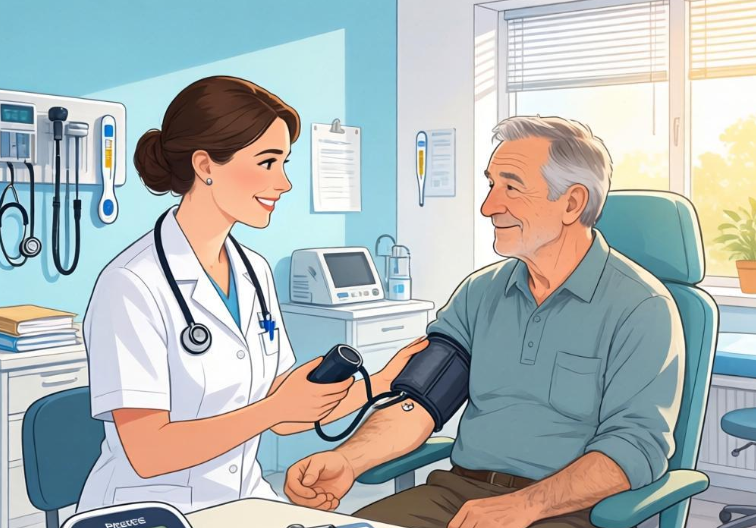
This is not a mere thought. It is a practical conclusion drawn from three months of continuous operation of the entire pediatric system during the peak period of respiratory diseases in our city last winter. Last week, I was stationed at the community health service center in my jurisdiction. I met Aunt Zhang who lives nearby and came to see a doctor with her grandson with a red face and a fever. She recounted her experience at the end of last year and was still worried: "How could I dare to come to the community at that time? I took the baby to the top three hospitals all night, and waited in line for 4 hours in the cold wind. The doctor looked at her for 5 minutes and said it was ordinary influenza A. Just go home and take antipyretics. We will suffer the consequences of the baby."
There are actually different opinions on this matter in the industry: one group thinks that the priority is to protect the safety of the top three hospitals. After all, if serious or critical illness does occur, only the top three hospitals have the ability to treat patients. In December last year, the utilization rate of pediatric beds in our hospital once reached 129%, and even the extra beds in the corridor were lined up at the elevator entrance. The nurses have been working non-stop for almost a month. The other group believes that 80% of the children who visit the hospital are actually infected with common viruses, and there is no need to go to the tertiary hospital. The best solution is to reserve resources for seriously ill children. This is correct. I attended a clinic in the community last week and received 17 children in one morning. 15 of them had common upper respiratory tract infections. They can just prescribe antipyretics and teach home care. There is no need to go to the tertiary hospital and wait in line for three or four hours.
But the problem is that parents were not willing to go to the community at all before. I met a mother whose child had a fever of 38.5 degrees. She drove 20 minutes to bypass the community health service center and went straight to a tertiary hospital. When I asked her why, she said, "When I went to the community before, I couldn't even get a mycoplasma test, and the medicine was not complete, so it was a waste of time." Our district made a small reform at the end of last year. It did not carry out any high-level projects, but did three things: first, all 12 community health service centers were equipped with children's atomization equipment and four rapid detection kits for respiratory pathogens. The results of influenza A, B, mycoplasma, and syncytial virus can be obtained in 15 minutes. Commonly used children's antipyretics and atomizers are also available; then three pediatricians from tertiary hospitals are arranged every week. The students took turns to sit in various communities, and at the same time, they gave three rounds of special training on the diagnosis and treatment of children's respiratory diseases to all the general practitioners in the community. If they failed the test, they could not take up the job. In the end, 100,000 copies of the "Home Care Clear Paper for Children's Respiratory Diseases" were printed and distributed everywhere in communities, hospitals, and school gates. They clearly stated when to go to the hospital and when to observe at home. Even the dosage of antipyretics was marked according to body weight. Regarding these three inconspicuous things, during the peak of respiratory infections in the spring of this year, the outpatient volume of tertiary pediatrics in our district dropped by 31% compared with the same period last year, and the number of community pediatrics more than tripled. Many parents said, "You can get tested at your doorstep, and the doctor is also from a tertiary hospital, so why go to a big hospital and suffer."
Of course, there are a lot of controversies now, the most prominent one is "whether to do examinations or not": Some parents think that if the child has a fever and does not take a CT scan or do a whole blood test, the doctor is irresponsible, and some doctors think that prescribing a lot of tests for a common cold is over-medical treatment. Our current approach is not one-size-fits-all. Let’s make it clear to parents first: if the child has been feverish for less than 24 hours, is in good spirits, can run, jump, and eat snacks, there is absolutely no need for a check-up. Just go home and observe. If the child has been feverish for more than 3 days, has low spirits, rapid breathing, and severe vomiting, then all the tests that should be done must be done. Two weeks ago, a father insisted on taking a CT scan for a child who had been having a fever for one day. I talked to him for 20 minutes, saying that my daughter had a fever of 39.2 degrees last month. I didn’t even check her blood, so I just nursed her at home for three days. The child who had a CT scan for a common virus infection would also be exposed to radiation, so he couldn’t do it. In the end, he agreed to observe him first, and sent me a message the next day to say that the child’s fever had gone down. Thanks to not doing random checks.
There is also the Internet pediatric diagnosis and treatment, which is very popular now. Some people say it can greatly relieve offline pressure, while others think the risk is too high. I also do online consultations myself. To be honest, online can only do preliminary assessment and popular science. If you really want to diagnose a disease, you have to go offline. Last month, a parent came to me online and said that his child just had a slight cough, no fever, and was in good spirits. I heard the description and thought it was ordinary. I had a cold and asked him to drink more water for observation. The next day he brought the child to the hospital. I saw that the suprasternal fossa was indented when the child inhaled. It was already mild pneumonia. The parents did not know that the "three indentation signs" were danger signs. It was too easy to miss the diagnosis just by describing it in words. Therefore, online consultation can only be used as a supplement and cannot replace offline consultation. This bottom line must be maintained.
I have been a pediatrician for 11 years. To be honest, there is really no special secret to the diagnosis and treatment of children's respiratory diseases. To put it bluntly, we need to put every little thing into practice: don’t let parents wait in line in the cold for hours with their feverish children, don’t let community doctors want to test their children but don’t have the equipment, don’t tell parents a bunch of unintelligible professional terms, and make it clear to people “when to go to the hospital.” Children are the heart and soul of every family. If you think more about parents and children when doing things, half of the work will be done.
Disclaimer:
1. This article is sourced from the Internet. All content represents the author's personal views only and does not reflect the stance of this website. The author shall be solely responsible for the content.
2. Part of the content on this website is compiled from the Internet. This website shall not be liable for any civil disputes, administrative penalties, or other losses arising from improper reprinting or citation.
3. If there is any infringing content or inappropriate material, please contact us to remove it immediately. Contact us at: