
The relationship between fall prevention and mobility maintenance
Deterioration of mobility is the first high-risk cause of falls, and injuries caused by falls will reversely accelerate the loss of mobility. There is no effective fall prevention that is separated from mobility maintenance, and there is no scientific mobility maintenance that ignores fall prevention.
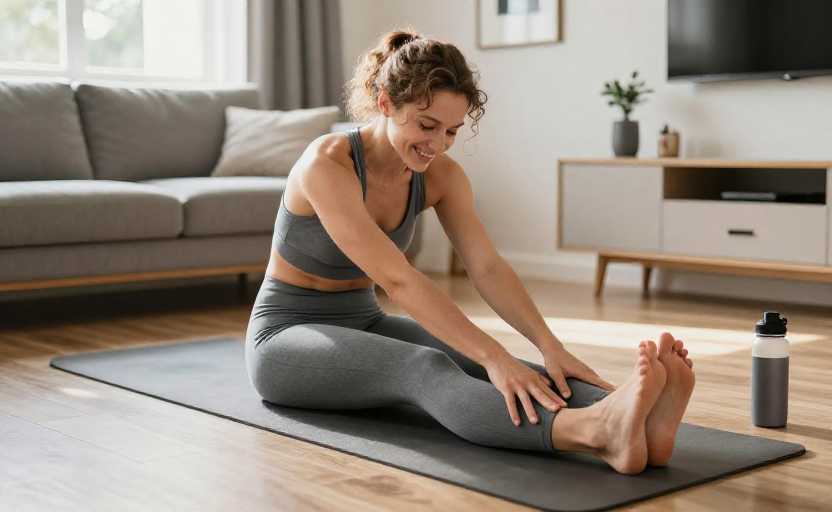
Two years ago, when I was doing rehabilitation screening in the community, I met 72-year-old Aunt Zhang. She has mild degenerative disease in her knees. I heard others said that the elderly would easily become paralyzed if they fell. She wanted to hold on to the wall when going out. She didn't even dare to go to the small square downstairs for fear of slipping on a stone. The family also followed her lead, moving the coffee table, sawing the door thresholds, and installing a row of handrails in the bathroom. As a result, she lost 4 pounds of muscle mass in her lower limbs in less than half a year. The day she stepped on a 10-centimeter-high stool to get the quilt from the top of the wardrobe, her foot slipped and she fell, causing a fracture of her femoral neck. After the surgery, people who used to be able to buy groceries and cook for themselves now have to have someone help them when they stand up. It was just a minor knee problem, but now most of their mobility has been reduced.
Interestingly, the intervention ideas for fall prevention in the rehabilitation circle originally have two completely different directions. Most colleagues who operate elderly care institutions prefer "environment first". After all, most of the people living in the institutions are semi-disabled elderly people. First, they must prepare anti-slip mats, handrails, and barrier-free ramps, and wrap all the raised edges and corners with soft rubber. This will provide quick results and low risks. In the renovation project of an old community that I followed up on before, I installed bathroom handrails and fixed anti-slip mats at the door for more than 200 elderly households. After half a year of statistics, the fall rate of residents dropped by 32%. The data is really good. But friends who do sports rehabilitation do not agree with this idea. They always say that "the more external protection is provided, the less confident the elderly will be in their mobility, and they will not dare to move, and their muscles will lose faster." I have a father who is a rehabilitation practitioner. He is 81 years old and practices 20 minutes of balance training and 15 minutes of silent squatting against the wall every day. Last winter, he stepped on a piece of ice in the vegetable market and shook it three times but stabilized without falling. According to his words, "Muscles are the best anti-slip mats."
These two ideas have been arguing for five or six years, but there is no absolute right or wrong. I have also encountered an extreme counterexample myself: In order to prevent the old man from falling, a family member removed all the things that might trip him up in the house. Even the pots of orchids that the old man had raised for more than ten years were moved to the balcony and locked up. As a result, the old man was so bored at home that he sneaked out to visit the flower and bird market while his family was at work. He stepped on a loose floor tile and fell on the road. The distal end of his radius was fractured, which was more serious than the previous fall at home. You see, it's useless to rely on the environment to create a "safe house". You really have no ability to resist risks when you go out.
The fall monitoring data for the elderly released by the Chinese Center for Disease Control and Prevention in 2023 can also illustrate the problem: among the causes of falls among the elderly over 65 years old, insufficient lower limb muscle strength and decreased balance function account for 46%, external factors such as smooth environment and obstacles only account for 21%, and the rest include confounding causes such as vision loss and drug side effects. With the data here, you can understand why neither path alone will work.
Of course, there are exceptions. Last month, I just saw a 78-year-old man who plays table tennis three times a week. He has more muscle mass in his lower limbs than many 50-year-old middle-aged people, and his balance function screening score is also very high. As a result, he went out for a walk on a rainy day last week, stepped on the moss between the steps, and fell to the ground, causing a fracture in his coccyx. This is indeed due to bad luck, but you think if he had reacted half a second faster? It's hard to say, after all, as you get older, the nerve conduction speed will naturally decrease year by year, and no matter how good your muscles are, they can't withstand the slip when you step on the moss.
When I do science popularization for the elderly in the community, I never just list one, two, and three things to pay attention to. I always ask them to try standing on one leg for 10 seconds at home with their eyes open. If they can stand easily, don't stay bored at home every day. Go downstairs to walk and dance more. Two or three times a week, practice squatting against the wall for two to three minutes. It is more effective than installing ten handrails. If you are shaking badly after standing for 10 seconds, don’t force yourself to practice balance. First, fix the anti-slip mat at the door of your home with tape, install an armrest next to the toilet in the bathroom, and wear anti-slip shoes with deep soles. Then slowly start with the sit-stand practice of “sitting on a chair and standing up without holding on to the armrest.” Don’t think that installing armrests means “I’m useless when I get old.” Isn’t this just like installing training wheels when you first learn to ride a bicycle? When your ability improves, just don't use it, there's no shame in it.
To put it bluntly, prevention of falls has never been a shackles on the life of the elderly, and maintenance of mobility is not something that everyone has to bear to resist aging. Putting the two together, to put it bluntly, it allows us to be able to go to the vegetable market to pick fresh vegetables when we get old, to be able to dance squarely to get a C position, to be able to slowly climb a hill to enjoy the scenery, and not have to worry about falling all day long. This is better than anything else.
Disclaimer:
1. This article is sourced from the Internet. All content represents the author's personal views only and does not reflect the stance of this website. The author shall be solely responsible for the content.
2. Part of the content on this website is compiled from the Internet. This website shall not be liable for any civil disputes, administrative penalties, or other losses arising from improper reprinting or citation.
3. If there is any infringing content or inappropriate material, please contact us to remove it immediately. Contact us at:
